Can't Manage Your Poker Finances? Try These 5 Tips
Treat your poker bankroll as untouchable: separate funds, set session limits, follow buy-in rules, and track every session.
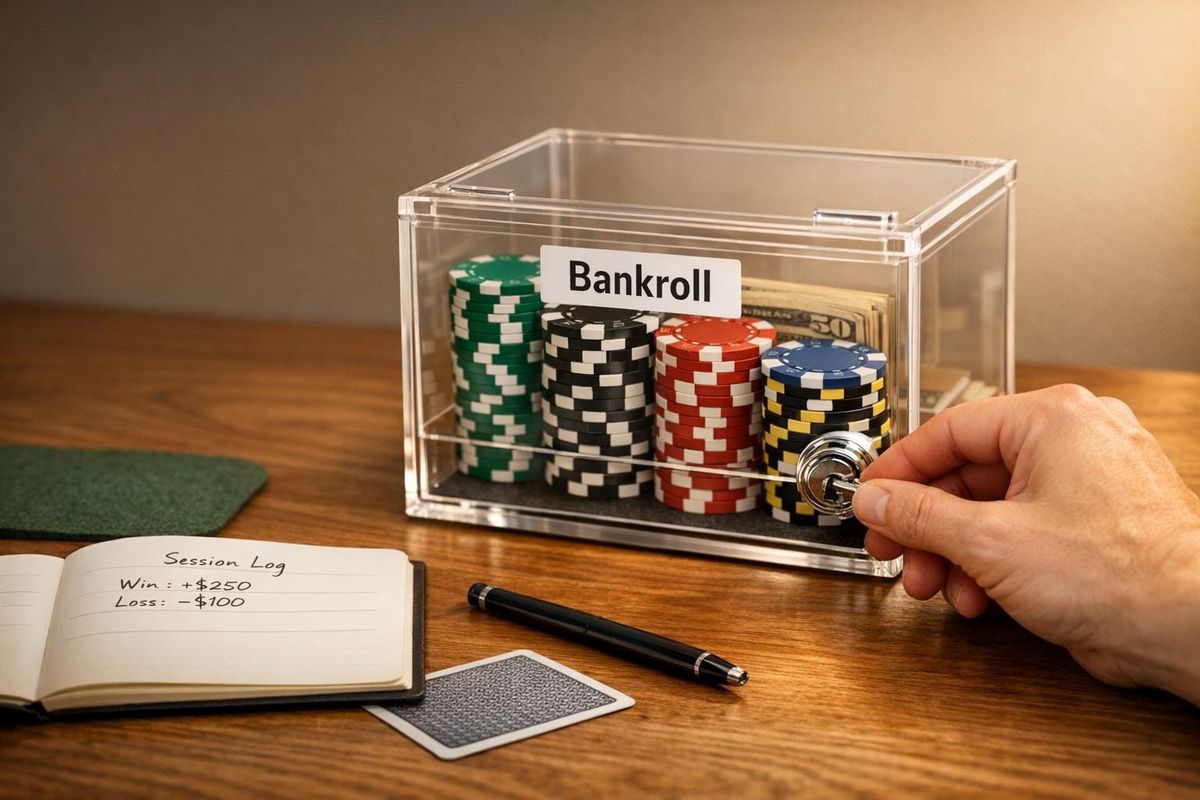
Losing at poker isn't just about bad hands - poor financial habits can do more damage than any unlucky flop. Managing your bankroll is the key to long-term success. Here’s a quick breakdown of how to protect and grow your poker funds:
- Separate Poker Money: Keep your bankroll separate from personal finances to avoid emotional decisions.
- Play Within Your Means: Only use money you can afford to lose - never dip into essentials like rent or groceries.
- Set Limits: Establish win/loss limits before each session to stay disciplined and avoid chasing losses.
- Follow Bankroll Rules: Stick to recommended buy-ins (e.g., 20–50 for cash games, 100–200 for tournaments) to handle swings.
- Track Everything: Use tools like Pokerbase to log sessions, monitor performance, and manage expenses.
These strategies help you avoid common pitfalls like "scared money" play or reckless decisions. Even pros like Andrew Moreno turned their game around by adopting strict bankroll management. Treat your bankroll as untouchable - it’s your lifeline in poker.
Poker BANKROLL Management 101 (BRM Tips)
sbb-itb-94c8472
1. Keep Your Poker Bankroll Separate from Personal Money
One of the golden rules of managing poker finances is this: don’t mix your poker bankroll with the money you need for daily living. Combining the two can lead to risky situations. A losing streak could mean missing rent or grocery payments, and that kind of pressure can lead to fear-based decisions at the table.
Daniel Okorie, a writer and poker player, puts it well:
"I never reach for rent, grocery, or emergency funds to play poker anymore. Setting up a separate bank account for my bankroll helped a lot. It keeps my finances neat and stops me from making emotional decisions."
To follow this approach, consider opening a separate bank account or using a service like PayPal or Skrill exclusively for poker-related transactions. If you’re playing poker professionally or semi-professionally, it’s also a good idea to maintain an emergency fund with 6 to 12 months’ worth of living expenses. This ensures you’re financially secure even during rough patches.
Treat the money in your poker account as untouchable - it’s your working capital. This separation not only keeps your finances organized but also gives you a clear picture of your poker performance. When funds are mixed, it’s easy to lose track of whether you’re genuinely winning or just pulling from money meant for bills.
If you’re playing live poker, bring only the cash you’ve set aside for that session. Leave your ATM and credit cards at home to avoid the temptation of chasing losses impulsively. This kind of discipline can make a huge difference in your long-term success.
2. Only Play with Money You Can Afford to Lose
It's one of the golden rules: only play with money you can afford to lose. But what does that actually mean in practice? In poker, this refers to using funds specifically set aside for the game - money that isn't needed for essentials like rent, groceries, utilities, or debt payments. The goal is to avoid dipping into necessary funds, which could lead to emotional decisions or fear-driven play.
A straightforward way to figure out your safe spending limit is by doing a quick financial check. Subtract your monthly expenses - and a portion of your savings - from your available cash. For example, if you have $2,000 in liquid funds but need $1,500 for bills, your poker bankroll is $500. This calculation ensures you know exactly how much you can risk without jeopardizing your essentials.
Playing with money you can't afford to lose often leads to what's known as "scared money" syndrome. When you're overly worried about the consequences of losing, you might make overly cautious or poor decisions at the table. As poker pro and coach Jonathan Little puts it:
"Make sure you do not bring money to the casino that you are not comfortable losing."
Using essential funds for poker can also lead to dangerous behaviors, like chasing losses by playing higher stakes or extending your sessions. This kind of behavior can quickly spiral into serious financial issues.
Even seasoned players protect themselves by keeping an emergency fund. A solid safety net - equivalent to 6–12 months of living expenses - can help you weather downswings without disrupting your life or your game. Being disciplined with your finances not only strengthens your gameplay but also sets the stage for managing session limits effectively.
3. Set Win and Loss Limits for Each Session
Before you even sit down to play, decide on your maximum loss limit. This is often referred to as a stop-loss, typically set between 3–5 buy-ins, depending on your ability to handle losses emotionally. The key here is to make this decision before you start playing, when your judgment is clear and not clouded by the heat of the moment. Knowing your limits helps you steer clear of emotional decisions that can spiral out of control.
There's a psychological concept called the "Threshold of Misery" that comes into play here. This is the point where losing more money doesn't increase your emotional pain - it just numbs you. The danger? Reaching this threshold often leads to reckless decisions, as the pain of losing feels inevitable. A stop-loss acts as a safeguard, keeping you from ever hitting this point. Poker bankroll expert Kieran Westbrook emphasizes this:
"Set a stop-loss of three, four or five buy-ins, depending on your temperament, before you sit down to play, and have the discipline to see it through."
In addition to keeping your poker funds separate and only playing with money you can afford to lose, setting strict session limits is another important layer of protection for your bankroll. While loss limits are straightforward, win limits require a more nuanced approach. Some players like to set financial goals for motivation, but many professionals caution against rigid win limits. Why? Cash games are often seen as "one long session", and leaving a profitable table just to secure a win could mean walking away from potential earnings. Instead, focus on evaluating the game's profitability and your mental state rather than fixating on a specific dollar amount.
4. Follow Bankroll Rules for Stakes and Buy-ins
Once you've set strict session limits, it's time to align your stakes with the size of your bankroll. This step is crucial for managing the natural ups and downs of poker. For cash games, having 20–50 buy-ins available is generally recommended, depending on how much risk you're comfortable taking on. Tournaments, however, demand a larger reserve - typically 100 to 200 buy-ins - since the odds of finishing out of the money hover around 80%–85%.
If you prefer a cautious approach, aim for 40–50 buy-ins for cash games and at least 150 buy-ins for tournaments. On the flip side, if you're okay with taking more risks and have outside income to replenish losses, you could go with 20–30 buy-ins for cash games. Keep in mind, though, that this approach carries a higher risk of significant losses. A good general rule is to never risk more than 5% of your total bankroll in a single cash game session. For tournaments, that percentage should drop even further - keep it between 1% and 2% per event.
| Game Type | Aggressive | Standard | Conservative |
|---|---|---|---|
| Cash Games (NLH) | 20 BI | 30 BI | 40–50 BI |
| MTTs | 50–100 BI | 100 BI | 150–200+ BI |
| Sit & Go (SnG) | 30 BI | 40 BI | 50–60 BI |
When you're ready to move up in stakes, discipline is key. Don't jump to higher levels until you've accumulated the recommended buy-ins for that level - not just for your current one. For instance, if you're moving from a $1/$2 game to a $2/$5 game, make sure you have 30–50 buy-ins for the $2/$5 level. With a standard buy-in of $500, this means having a bankroll of $15,000–$25,000 before making the leap. And if things don't go as planned, have a hard stop-loss in place. If you lose 5–10 buy-ins at the new level or if your bankroll falls below 15–20 buy-ins for your current stake, drop back down immediately.
As PokerOffer wisely states, "Moving down is a skill. It protects your bankroll from 'ruin.' Every professional player moves down when necessary".
5. Track Sessions and Finances with Pokerbase
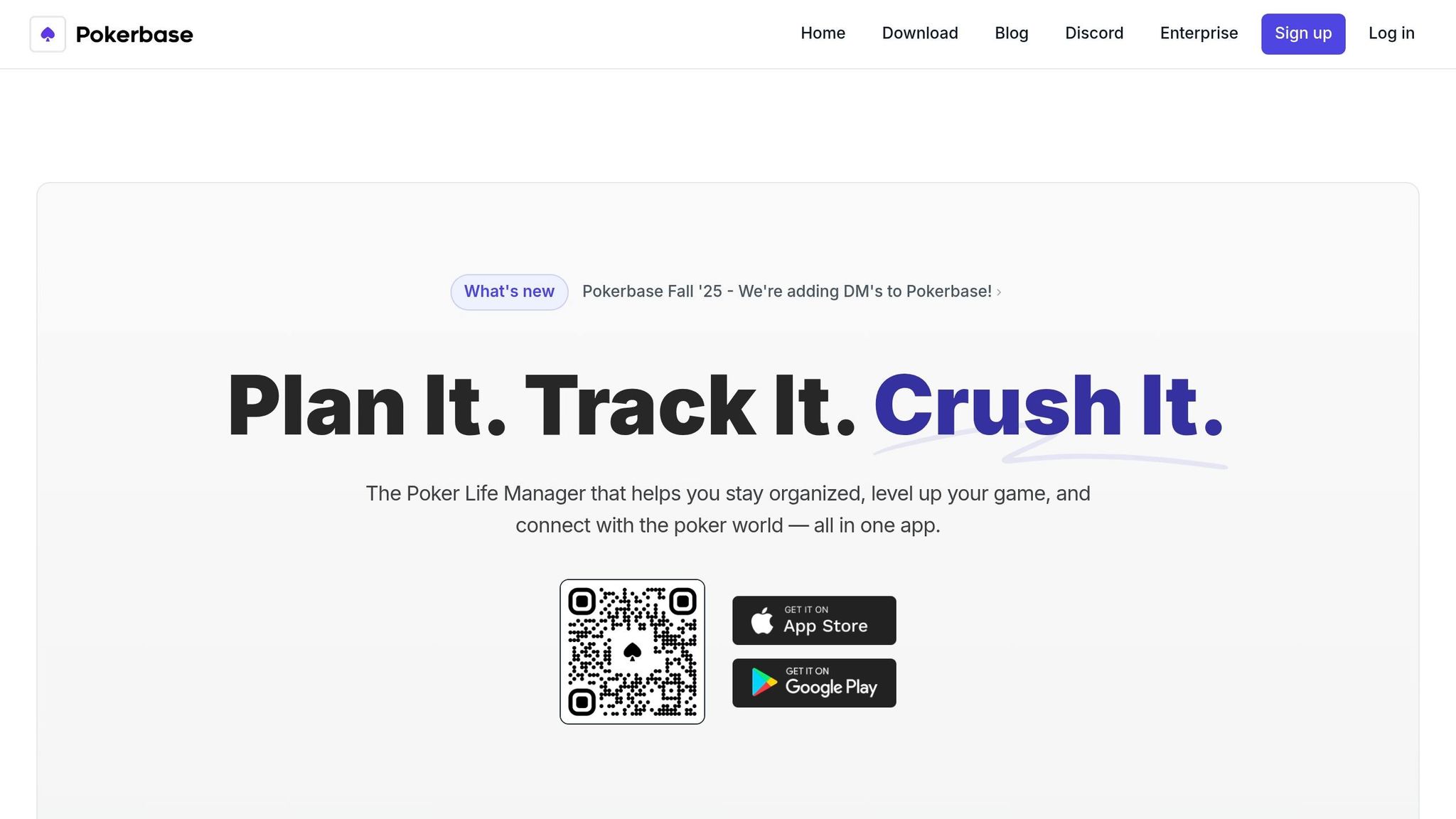
Keeping poor records can quietly drain your bankroll, but Pokerbase makes managing your poker finances a breeze. This app lets you log live and online sessions - whether cash games, tournaments, or home games - in just seconds, eliminating the need for clunky spreadsheets or relying on memory. Plus, its built-in document scanner allows you to snap photos of tournament receipts, which are then automatically added to your history [16,17].
Pokerbase doesn’t stop at basic tracking. It calculates key performance stats like hourly win rates, ROI, and profitability metrics automatically. You can even filter your results by game type, stakes, or location for deeper insights [16,19]. Professional poker player Aliaksandr Shylko, with career earnings exceeding $5.2 million, calls it a game-changer:
"Pokerbase is the best poker bankroll tracker - user-friendly and comprehensive. With its intuitive interface, I can effortlessly monitor my wins, losses, and overall performance".
Conclusion
These financial strategies are the cornerstone of maintaining long-term success in poker. Managing your poker finances boils down to discipline and straightforward habits. Start by keeping your poker funds separate from your personal money. This ensures your essentials are protected and helps you avoid making emotional decisions at the table. Only play with money you can afford to lose - this keeps poker enjoyable rather than a source of financial stress.
Setting session limits is another key step, as it helps control tilt. Following proper bankroll management rules - such as keeping 20–40 buy-ins for cash games or 50–100 buy-ins for tournaments - provides the buffer needed to handle the variance that can stretch across 10,000–20,000 hands or more. Using tools like Pokerbase to track your results eliminates guesswork, allowing you to clearly see which games are profitable and which might be draining your bankroll.
The impact of disciplined bankroll management is striking. Over a year, a player who avoids impulsive spending and practices delayed gratification can grow their bankroll to $46,800, while someone with poor habits may struggle to reach $20,000. As professional player Jonathan Little points out, neglecting proper bankroll habits often leaves players stuck in a cycle of financial struggle.
Adopting these habits - separating funds, setting session limits, and tracking results - lays the groundwork for a sustainable poker career. These aren't just suggestions; they’re essential practices that differentiate players who thrive long-term from those who burn out after a few rough sessions.
Your bankroll is your lifeline in poker. Guard it, monitor it, and let it grow.
FAQs
How big should my poker bankroll be for my stakes?
Your poker bankroll needs to be big enough to manage the ups and downs that naturally come with your stakes and playing style. A widely accepted rule of thumb is to keep at least 20 buy-ins for cash games. While the exact amount can differ based on whether you're playing cash games or tournaments, having a well-maintained bankroll is key to staying financially steady over the long haul.
When should I move up or down in stakes?
When it comes to moving up in stakes, timing is everything. You should only step up when your bankroll is big enough to withstand the inevitable ups and downs of higher-stakes games. This means having enough buy-ins to avoid putting yourself in financial trouble.
On the flip side, if your bankroll dips below the suggested amount for your current stakes, it’s wise to step down. Doing so protects your remaining funds and gives you a chance to rebuild without unnecessary pressure.
The key here is proper bankroll management - it’s what helps you navigate variance and keep playing in a way that’s financially sustainable.
What should I track besides wins and losses?
To stay on top of your poker finances, it's not just about tracking wins and losses. Pay close attention to your bankroll details - specifically, how many buy-ins you have for various games and stakes. This approach helps you prepare for the natural ups and downs of the game and ensures your bankroll remains steady. Steer clear of putting too much on the line in high-stakes games, as this can quickly throw your finances off balance.